

A print care card for art buyers gives each customer a few simple ways to protect the art after it leaves your studio. It can answer questions they may forget to ask at checkout. How should they hold an unframed print? Where should they hang it? What should they avoid when cleaning it?
Here is the short version: keep the card clear, calm, and useful. Cover handling, sunlight, moisture, cleaning, framing, and your contact details. A print care card should help the buyer feel confident, not make the artwork sound fragile or difficult to own.
Give Print Care Cards One Simple Job
The card is not a full framing guide. Give it one job: help the buyer avoid common damage. Explain how to hold the print, how to store it before framing, and where to get help if something looks wrong.
Use plain words. ‘Hold the print by the edges with clean, dry hands’ is easier to use than a long note about oils and coatings. Tie each line to a step the buyer can take.
Use the full print care and handling guide as your source, then trim the customer card to the few points that fit the print you sold.
Start With Safe Handling
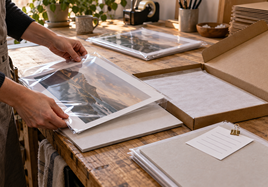
Ask buyers to handle an unframed print with clean, dry hands. They should hold it by the edges and support it from below. This helps prevent fingerprints, scratches, bends, and marks on the print.
If the print is inside a sleeve, the buyer can view it without taking it out right away. Don't tape a note or label to the art. The Library of Congress also says to avoid touching the printed area. Hold the edges or the sleeve instead.
Keep Light and Framing Advice Practical
Tell buyers to keep the print out of direct sunlight. Light can fade a print over time, but the card doesn't need to sound scary. A simple line about choosing a wall away from strong sun is enough.
For framing, suggest acid-free materials and UV-protective glazing, such as glass or acrylic, when the budget allows. Don't promise that one frame will protect a print forever. Good materials and a safe wall can help, but every room and piece of art is different.
Mention Moisture, Heat, and Cleaning
A paper print does best in a room that stays cool and dry. Tell the buyer to avoid damp basements, hot attics, vents, heaters, and places where leaks may happen. The card doesn't need a chart full of room settings.
Keep cleaning advice simple. Don't use water or household cleaner on the printed surface. If the print is framed, cleaner should not run under the frame edge. If an unframed print has a mark, ask the artist, printer, framer, or an art conservator before rubbing it.
Match the Card to the Package
Put the card where the buyer can find it, but don't let it rub across the print. A small envelope, package pocket, or spot behind the backing board can work. Keep tape and labels on the package, not on the art.
If you are choosing a sleeve, backing board, or mat, use the packaged prints guide to plan the handoff. The card should be easy to find. The buyer should not have to unpack the whole print to reach it.
Add the Details Only You Know
The best card also tells the buyer what they own. Add the art title, artist name, print material, edition number when it applies, and a website or email for questions. If the paper, canvas, mount, or frame needs special care, say so clearly.
Avoid claims you can't prove. Don't promise an exact life span or say a print can never fade. Light, room conditions, framing, and handling all matter. Give the buyer simple steps you know are safe.
A Short Print Care Card Template
You can adapt this starting point:
Handle this print with clean, dry hands. Hold it by the edges and support it from below. Keep it out of direct sunlight and away from damp or hot spaces. Don't use water or household cleaner on the print surface. For framing, ask about acid-free materials and UV-protective glazing. Contact the artist if you have a care question.
Read the card out loud before you print it. Cut any line that sounds scary, vague, or too technical. Then make sure the advice fits the art in the package. Don't reuse a paper print card for canvas, mounted work, or a framed piece without checking it first.
Final Takeaway
Print care cards work best when they are short, clear, and easy to use. Cover handling, light, moisture, cleaning, and framing. Then add the art details and a way to reach you. That small card can make the handoff feel complete and help the buyer protect the print.
FAQ
How long should a print care card be?
Keep it short enough to scan in under a minute. Cover handling, sunlight, moisture, cleaning, framing, and how to contact you with a question.
Should every art print include care instructions?
A care card is most helpful when the buyer receives an unframed paper print, a limited edition, or a piece that may be stored before framing.
Can I put the same care card in every order?
Use one core card for paper prints, then change any advice that depends on the material. Canvas, mounted work, and framed pieces may need different handling notes.