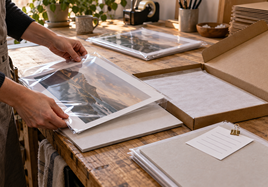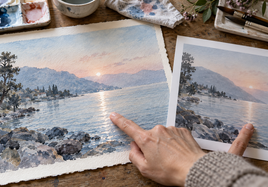


If you are getting giclee fine art prints ready to sell, a small first run can save you from guessing. It lets you test the print, the packaging, and the offer before you commit to a larger batch.
Here is the short version: Start with a small run when you need real feedback on color, paper, size, packaging, and buyer interest before you spend money on a larger edition. If you are planning a first run, keep giclee fine art prints open while you compare the options.
Start With One Small Batch
A small first run gives you real information. You can see the print in your hands, show it to buyers, pack it, photograph it, and find out whether people actually want that size and surface.
That's much better than guessing from a screen. A large order can feel efficient, but it also locks in every choice before you know if the print works as a product.
Pick One Image, Size, and Paper First
Keep the test simple. Pick one image or a tight little series. Choose one size. Choose one paper. Then look at how that exact setup performs.
If you test five papers, three sizes, and ten images at once, the results get messy fast. You may sell a few prints, but you won't know which choice helped. A cleaner test makes the next order easier.
If paper choice or surface feel is still fuzzy, free media sample set can help before the test run.
Check Color and Detail Before You Print More
A giclee print can hold a lot of color and detail, but the file still has to work at the final size. Before you order more, check shadows, soft gradients, signatures, borders, and any important texture.
If the first print feels too dark, too soft, too cropped, or not quite like the artwork, fix that now. The point of a small run is to catch those issues while they are still small.
Sell the First Run Before You Guess Again
The best feedback is not always a comment. It's whether people buy the print. Put the first run in the place you actually plan to sell it: your shop, a fair, a studio wall, a newsletter, or a collector preview.
Pay attention to what people do. Do they pick it up? Ask about the size? Compare it to another piece? Walk away at the price? That feedback can tell you whether to reorder, adjust, or try a different format.
Keep the Specs Easy to Repeat
Once a test run looks right, write down the specs. Save the file name, print size, paper, border, crop notes, packaging, and proofing notes.
This is not busywork. It's how you make the next order match the first one. If the print sells, you don't want to rebuild the setup from memory.
Know When a Bigger Run Makes Sense
A larger run makes sense when the first batch sells, the print feels good in person, and the packaging works without stress. It also helps when you know the same setup can be reordered cleanly.
If the test run is sitting untouched, don't just order more. Ask what needs to change. The image may be strong, but the size, paper, price, or presentation may need a better fit.
Keep the Bigger Order Boring
Once the test works, resist the urge to change everything. Use the same file, size, paper, border, and packaging unless you have a clear reason to adjust.
Boring is good here. A repeatable print setup means fewer surprises, cleaner inventory, and a product you can talk about with confidence.
When the test run is ready to scale, use file prep for printing to keep the next order moving.
Don't Test Too Many Things at Once
A small run works best when it answers one clear question. Maybe you want to know if buyers like the size. Maybe you want to know if the paper feels right. Maybe you want to see if the price makes sense.
If you change every variable at once, the feedback gets hard to use. Keep the test narrow so the next decision is obvious.
Price It Like a Real Product
Don't treat the first run like a throwaway. Price it the way you would price the real product, with the print, sleeve, backing board, shipping supplies, fees, and your time in mind.
If the first run only sells when the price is too low, that's useful information. It may mean the size, paper, or offer needs to change before you print more.
Keep One Approved Print
When the first run looks right, keep one clean copy as your reference. Don't sell that one if you can avoid it. Put a note with the specs so you can match the next order.
That reference print is more useful than memory. It helps you compare paper tone, border size, crop, and color when you reorder later.
Watch the Packing Step
A print can look great and still be annoying to pack. Use the first run to test the sleeve, backing board, mailer, tube, label, or whatever you plan to use.
If the packaging takes too long or feels risky, fix it before the bigger batch. The best inventory is inventory you can actually ship or hand to a buyer without stress.
Use Feedback Without Chasing Every Opinion
People may have opinions about size, paper, and price. Listen, but don't chase every comment. Look for patterns. One random comment is just a comment. The same question from five people is a signal.
The goal is not to please everyone. The goal is to learn enough to make the next print run more confident.
Photograph the First Run Like You Plan to Sell It
Use the first run to make your real product photos. Photograph the print in the sleeve, on the table, in a frame, or however buyers will actually see it.
This can reveal small problems. The border may look too tight in photos. The paper may glare more than expected. The size may need a hand, frame, or table edge for scale. It's better to learn that before a larger batch is waiting on the shelf.
Set a Reorder Point
Before you sell the first run, decide what success looks like. Maybe you reorder when half the batch sells. Maybe you reorder after a fair if buyers asked about the same piece all day. Maybe you wait until the first size sells through.
A simple reorder point keeps you from reacting emotionally. If the print moves, you know when to make more. If it doesn't, you know to pause and improve the offer. This keeps the next order tied to real demand.
Change One Thing at a Time
If the first run is close but not quite right, change one thing for the next test. Try a different size, or a different paper, or a different border. Don't change everything at once.
Changing one thing keeps the lesson clear. If the next run sells better, you have a good idea why. That makes each small batch more useful than the last.
Ask for Help Before Scaling
Before you move from a small batch to a larger run, ask Stackhouse to check anything that still feels uncertain. That might be paper choice, file size, color, border width, or whether the print should be packed differently.
You don't need to become a print technician. You just need a clean enough plan that the next batch can be printed, packed, and sold without surprises.
Keep the Test Run Separate From Your Main Stock
If you already sell other prints, keep the test run easy to track. Mark the box, sleeve, or shelf so you know which pieces came from the first batch.
That makes the lesson cleaner. You can see how the new print performs without mixing it into older inventory. It also helps you spot any production detail you want to change before the next order. Keep the notes with the batch so the lesson is easy to find later, especially during busy sale weeks.
Final Takeaway
Start small with giclee fine art prints when you need real proof before a larger run. Test one clear setup, sell or show it, save the specs, and reorder only when the first batch tells you what is working.
FAQ
How many giclee fine art prints should I order first?
Start with enough to test the real sale, not enough to fill a closet. A small run lets you check color, paper, packaging, price, and buyer response before ordering more.
Should I order a proof before the first small run?
Yes, if color, paper texture, border size, or edition consistency matters. A proof is cheaper than discovering a problem after the full batch is printed.
When should I reorder a larger batch?
Reorder when the first run sells, the specs are written down, and you are confident the same size, paper, and packaging still fit the way buyers respond.