

How to Pack and Display Giclee Fine Art Prints at Art Fairs
If you are getting prints ready to sell, giclee fine art prints can be a smart choice. But the best choice depends on the artwork, the file, and how the print will be handled.
Here is the short version: Pack prints so they stay clean, flat, and easy to browse. Display only a few strong samples, then keep sellable prints protected until someone buys them. A good next step is to compare giclee fine art prints as you read.
Start With How You Will Sell It
A print is not just an image. It is something people will hold, frame, ship, gift, or hang. Small choices like paper surface, border size, crop, and proofing can change how finished work feels in a booth, a studio sale, or a collector package.
For artists, the print should still feel like the original work. For photographers, it should hold the right detail, tone, and mood. Either way, the print needs to feel intentional when someone sees it in person.
Keep the Print Plan Simple
At an art fair, people make quick decisions. They need to see the work, understand the size and price, and feel safe handling the print. A simple display makes that easier.
If you are still deciding on surface, size, border, or workflow, print sizes, borders, and cropping can help.
A useful decision pass looks like this:
- Use one clean display copy for each key image or size.
- Keep sellable prints in sleeves, bins, flat files, or boxes.
- Label the size, paper, and price clearly.
- Group prints by size or series so browsing feels easy.
- Bring a small reorder note sheet so you can match the same print later.
Pick a Surface That Fits the Artwork
The surface affects how the print looks under fair lighting. Matte and fine art papers usually have less glare, which can help buyers see the image in a bright room. Glossier surfaces can look rich, but they may reflect lights or nearby movement.
No paper is perfect for every image. A textured paper can feel beautiful, but it may hide tiny details. A smoother paper can keep detail sharp, but it may not feel as tactile. The right answer depends on the work.
Check the File Before You Order
A ready file makes the whole print order easier. Check the resolution, crop, color profile, and border before you order. If something is off, fix it before it becomes a physical print.
Before you order fair inventory, check the file at the final size and think about how it will sit in a sleeve, bin, mat, or frame. Borders, signatures, and edge detail matter more when people are flipping through prints by hand.
Ask for Help When It Matters
Some jobs are worth a quick check before you order. Large prints, odd crops, color-sensitive artwork, mixed-media originals, and edition launches can all use another set of eyes.
When you are ready to turn the plan into an order, start with giclee fine art prints.
Make the Table Easy to Shop
A good art fair setup does not need to be fancy. It needs to be clear. People should be able to see the work, understand what size it is, and know how to buy it without asking five questions.
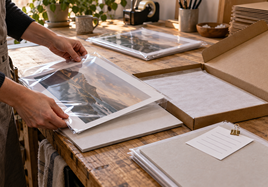
Keep your best examples visible. Keep the prints for sale protected. If people are flipping through a bin, make sure the prints are sleeved or separated so corners and surfaces do not get worn out before the sale.
Simple labels help too. A small card with the title, size, paper, and price can make the print feel more finished. It also gives buyers a reason to slow down and look closer.
If the table gets busy, the setup should still make sense. Put your most popular sizes where they are easy to reach. Keep backup prints behind the table or under it, and restock as needed instead of crowding every piece into view.
Final Takeaway
The best giclee fine art prints choice depends on the artwork, the file, and how the print will be used. Start with the final presentation, pick a surface that fits the image, check the file, and ask for help when a detail could affect the final print.
FAQ
Is giclee fine art prints better for artists or photographers?
It can work for both. The better question is what the image needs, how the print will be sold, and how you want it to feel in person.
What should I check before ordering giclee fine art prints?
Check the final size, crop, border, resolution, color, and paper choice. If the order is large or color-sensitive, order a proof first.
Should I order a sample before producing a full edition?
Yes, if the paper, color, border, or packaging will affect how people see the work. A small test can save a lot of stress later.